

I love making sous vide duck breast because it gives me restaurant-quality results with very little guesswork. Duck breast is already a rich and flavorful cut, but when I cook it using the sous vide method, the texture becomes incredibly tender and evenly cooked from edge to edge. The gentle water-bath cooking keeps all the juices locked inside, and when finished with a quick pan sear, the skin turns beautifully crisp while the inside stays perfectly pink and succulent.
This sous vide duck breast recipe is one of my favorite ways to prepare duck for guests because it removes the stress of overcooking. Traditional duck breast cooking can be tricky — too hot and it turns tough, too cool and the fat never renders properly. With sous vide, I get precise temperature control, repeatable results, and amazing flavor every single time. It’s ideal for dinner parties, special occasions, or anytime I want to elevate a meal without complicating the process.
Another reason I often recommend sous vide duck breast is flexibility. I can season it in different ways, infuse herbs and aromatics into the bag, and hold it at temperature until I’m ready to sear and serve. That makes timing much easier when preparing multiple dishes. If you’ve never tried duck before, this is a fantastic entry point because the method is forgiving and the outcome is consistently impressive.
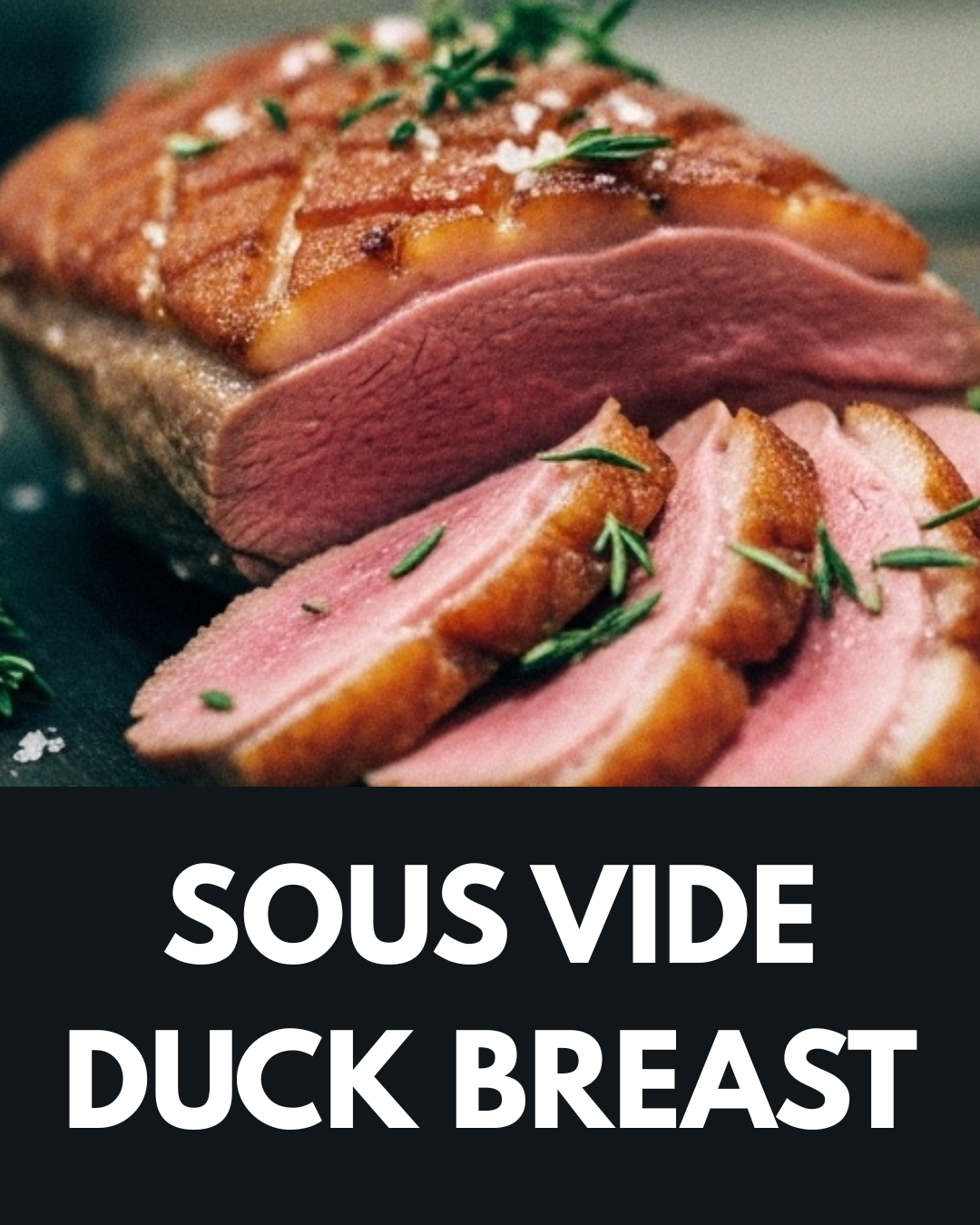
Below, I’ll walk you through my complete sous vide duck breast process, including temperatures, timing, crisping techniques, and flavor variations so you can make it perfectly on your first try.
Ingredients
- 6 duck breasts (about 6–8 oz each)
- 2 teaspoons kosher salt (or to taste)
- 1½ teaspoons freshly ground black pepper
- 2 teaspoons garlic powder or 4 fresh garlic cloves, lightly crushed
- 6 sprigs fresh thyme or rosemary
- 2 tablespoons olive oil or duck fat
- 1 teaspoon smoked paprika (optional)
- 1 teaspoon brown sugar (optional, helps browning)
- Zest of 1 orange (optional but excellent with duck)
Instructions
- Preheat the water bath: I start by setting my sous vide cooker to 135°F (57°C) for medium-rare duck breast. If you prefer medium, set it to 140°F (60°C). For more well-done duck, you can go up to 145°F (63°C). Let the water fully preheat before adding the duck.
- Prepare the duck skin: I pat each duck breast very dry with paper towels. Then I lightly score the skin in a crosshatch pattern, being careful not to cut into the meat. This step helps the fat render better during the final sear and improves crispiness.
- Season generously: I season both sides with salt, pepper, garlic, and paprika. I also like adding orange zest and a tiny pinch of brown sugar for balance. Duck loves sweet and aromatic flavors, and this combination works beautifully in a sous vide duck breast recipe.
- Bag with aromatics: I place each duck breast into a vacuum bag or zip-top freezer bag. I add a small drizzle of olive oil or duck fat and a sprig of thyme or rosemary to each bag. Arrange the duck in a single layer for even cooking.
- Seal the bags: I vacuum seal the bags if using a sealer. If using zip-top bags, I use the water displacement method — slowly lower the bag into the water to push air out, then seal just above the waterline.
- Sous vide cook: I lower the sealed duck breasts into the preheated water bath and cook for 2 hours. This timing allows the meat to become tender while staying juicy. One of the great strengths of sous vide duck breast is that an extra 30–60 minutes won’t ruin it, so timing is flexible.
- Remove and dry: After cooking, I remove the duck from the bags and save any juices for a sauce if desired. I pat the duck very dry again — this is critical for getting crispy skin in the next step.
- Preheat a pan: I heat a heavy skillet (cast iron works best) over medium-high heat with no oil added. Duck has plenty of fat in the skin already, so extra oil is usually unnecessary.
- Sear skin-side down: I place the duck breasts skin-side down in the hot pan and press lightly for full contact. I sear for about 3–5 minutes until the skin becomes deep golden brown and crispy. Fat will render out — I carefully pour off excess if needed.
- Quick flip: I flip the duck and sear the meat side for just 30–60 seconds. Since the inside is already perfectly cooked from sous vide, this step is only for color.
- Rest and slice: I let the duck rest for about 5 minutes, then slice against the grain. The inside should be evenly pink and juicy — the signature result of a well-made sous vide duck breast.
Tips or Variations
One tip I always follow when making sous vide duck breast is drying the skin thoroughly both before bagging and before searing. Moisture is the enemy of crisp skin. The drier the surface, the better the crust will form in the pan. Sometimes I even leave the scored duck uncovered in the refrigerator for a few hours to air-dry the skin.
Temperature choice matters. For a steak-like texture, I prefer 135°F (57°C). If serving guests who prefer less pink meat, I go with 140°F (60°C). Because sous vide duck breast cooks evenly, the doneness you choose will be consistent from edge to center.
Flavor variations are easy. I sometimes use Chinese five spice, coriander, and a touch of honey for an Asian-inspired version. Other times I go with classic French flavors like thyme, garlic, and orange peel. You can also finish the duck with a quick orange reduction sauce, cherry sauce, or balsamic glaze.
If you want extra rendering, after the main sear I sometimes lower the heat and continue cooking skin-side down for another minute or two. This renders more fat without overcooking the interior that the sous vide method has perfectly set.
Don’t throw away rendered duck fat from the pan. I save it for roasting potatoes or vegetables — it adds incredible flavor and makes the most of your sous vide duck breast cooking session.
Frequently Asked Question (FAQs)
Is sous vide duck breast better than pan-only cooking?
In my experience, yes. Sous vide duck breast gives more consistent internal doneness and tenderness. Traditional pan cooking can work well, but it requires more attention and timing precision. Sous vide removes most of the risk.
How long can I sous vide duck breast?
I recommend about 2 hours for standard duck breasts. You can extend to 3 hours without quality loss. Beyond that, texture may begin to soften too much. The beauty of sous vide duck breast is the forgiving timing window.
Do I need to add fat to the bag?
Not strictly, but I usually add a small amount of olive oil or duck fat along with herbs. It helps transfer flavor. Duck already contains plenty of fat, so only a little is needed.
Why is scoring the skin important?
Scoring helps rendered fat escape during searing, which leads to crispier skin. Without scoring, the fat layer can trap moisture and slow browning. Just be careful not to cut into the meat.
Can I make sous vide duck breast ahead of time?
Yes. I often cook it sous vide, then chill the sealed bags in an ice bath and refrigerate for up to 2 days. When ready to serve, I reheat briefly in warm water and then sear. It’s great for entertaining.
What should I serve with duck breast?
I like serving sous vide duck breast with roasted potatoes, sautéed greens, rice pilaf, or fruit-based sauces. Orange, cherry, fig, and berry sauces pair especially well with duck’s rich flavor.
Conclusion
This sous vide duck breast recipe is one of the most reliable ways I know to create a luxurious, flavorful main dish without stress. The precise temperature control ensures juicy, tender meat, while the final sear delivers that irresistible crispy skin. It’s a method that combines modern technique with classic flavor, and once you try it, it quickly becomes part of your regular special-occasion cooking.
I encourage you to experiment with seasonings and sauces to make this sous vide duck breast your own. Whether you keep it simple with salt and herbs or go bold with spice blends and fruit glazes, the core method stays dependable. Try it once, and you’ll see just how approachable gourmet duck can be at home.

Sous Vide Duck Breast Recipe
This sous vide duck breast recipe is one of my favorite ways to prepare duck for guests because it removes the stress of overcooking. Traditional duck breast cooking can be tricky — too hot and it turns tough, too cool and the fat never renders properly. With sous vide, I get precise temperature control, repeatable results, and amazing flavor every single time.
Ingredients
- 6 duck breasts (about 6–8 oz each)
- 2 teaspoons kosher salt (or to taste)
- 1½ teaspoons freshly ground black pepper
- 2 teaspoons garlic powder or 4 fresh garlic cloves, lightly crushed
- 6 sprigs fresh thyme or rosemary
- 2 tablespoons olive oil or duck fat
- 1 teaspoon smoked paprika (optional)
- 1 teaspoon brown sugar (optional, helps browning)
- Zest of 1 orange (optional but excellent with duck)
Instructions
- Preheat the water bath: I start by setting my sous vide cooker to 135°F (57°C) for medium-rare duck breast. If you prefer medium, set it to 140°F (60°C). For more well-done duck, you can go up to 145°F (63°C). Let the water fully preheat before adding the duck.
- Prepare the duck skin: I pat each duck breast very dry with paper towels. Then I lightly score the skin in a crosshatch pattern, being careful not to cut into the meat. This step helps the fat render better during the final sear and improves crispiness.
- Season generously: I season both sides with salt, pepper, garlic, and paprika. I also like adding orange zest and a tiny pinch of brown sugar for balance. Duck loves sweet and aromatic flavors, and this combination works beautifully in a sous vide duck breast recipe.
- Bag with aromatics: I place each duck breast into a vacuum bag or zip-top freezer bag. I add a small drizzle of olive oil or duck fat and a sprig of thyme or rosemary to each bag. Arrange the duck in a single layer for even cooking.
- Seal the bags: I vacuum seal the bags if using a sealer. If using zip-top bags, I use the water displacement method — slowly lower the bag into the water to push air out, then seal just above the waterline.
- Sous vide cook: I lower the sealed duck breasts into the preheated water bath and cook for 2 hours. This timing allows the meat to become tender while staying juicy. One of the great strengths of sous vide duck breast is that an extra 30–60 minutes won’t ruin it, so timing is flexible.
- Remove and dry: After cooking, I remove the duck from the bags and save any juices for a sauce if desired. I pat the duck very dry again — this is critical for getting crispy skin in the next step.
- Preheat a pan: I heat a heavy skillet (cast iron works best) over medium-high heat with no oil added. Duck has plenty of fat in the skin already, so extra oil is usually unnecessary.
- Sear skin-side down: I place the duck breasts skin-side down in the hot pan and press lightly for full contact. I sear for about 3–5 minutes until the skin becomes deep golden brown and crispy. Fat will render out — I carefully pour off excess if needed.
- Quick flip: I flip the duck and sear the meat side for just 30–60 seconds. Since the inside is already perfectly cooked from sous vide, this step is only for color.
- Rest and slice: I let the duck rest for about 5 minutes, then slice against the grain. The inside should be evenly pink and juicy — the signature result of a well-made sous vide duck breast.
Nutrition Information:
Yield: 6 Serving Size: 1Amount Per Serving: Calories: 304Total Fat: 18gSaturated Fat: 4gUnsaturated Fat: 14gCholesterol: 163mgSodium: 849mgCarbohydrates: 3gFiber: 1gSugar: 1gProtein: 30g