
If you have ever wanted to learn how to cook oha soup with cocoyam, this recipe will guide you through every step in a simple and practical way. Oha soup is one of my favorite traditional Nigerian soups because it has a rich taste, smooth texture, and that special aroma that makes every spoonful memorable. I enjoy making it for family gatherings because it always disappears from the pot faster than expected.
Oha soup comes from the eastern part of Nigeria and is especially popular among the Igbo people. The combination of fresh oha leaves, cocoyam as a thickener, and assorted meats creates a soup that feels deeply comforting. What I love most is how cocoyam gives the soup a natural creamy thickness without overpowering the flavor.
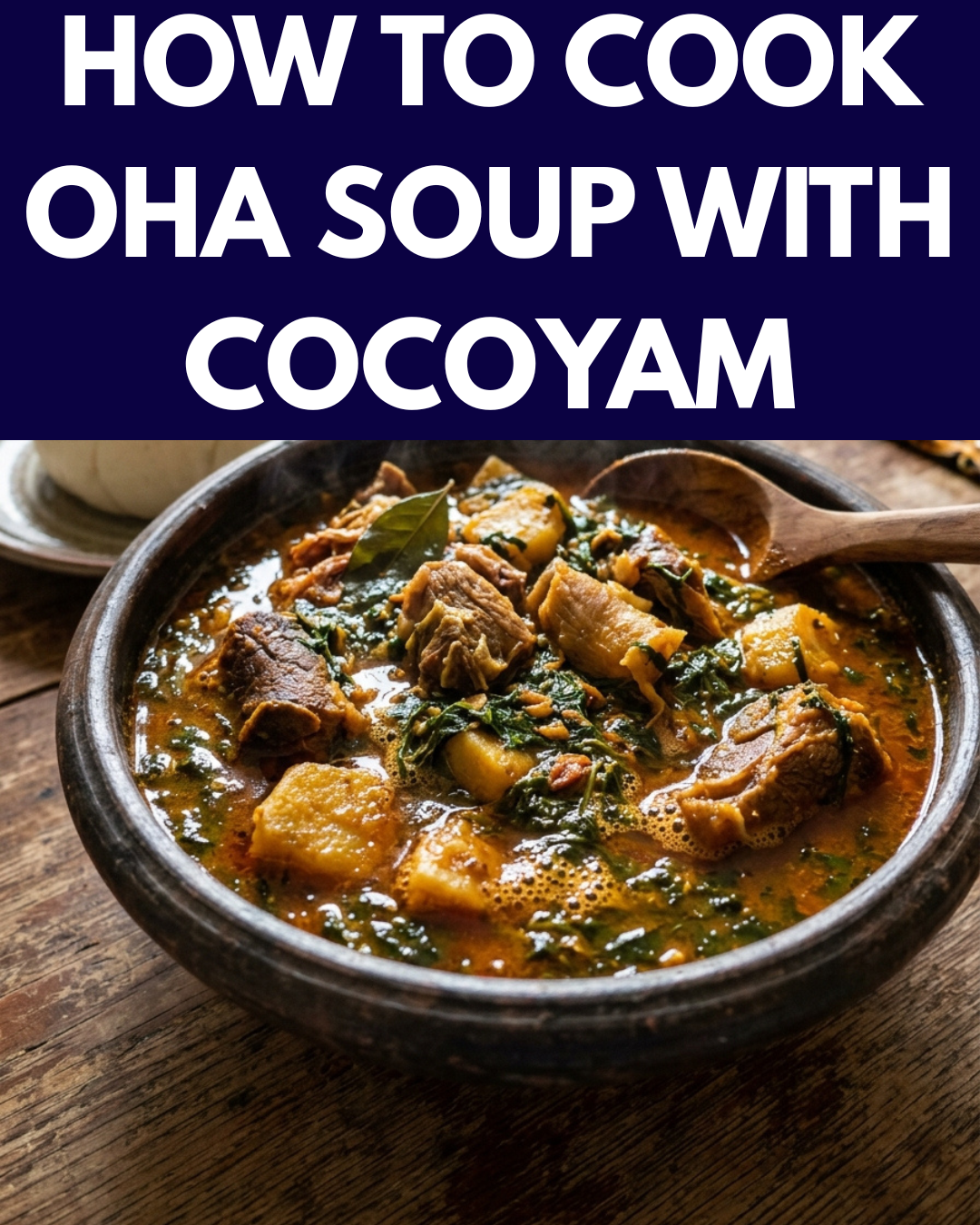
When I first learned how to cook oha soup with cocoyam, I realized the secret is balance. The cocoyam should be enough to thicken the soup, but not so much that it becomes too heavy. The oha leaves should also be added at the right time so they stay fresh and flavorful. Once you get these steps right, you can make a pot of soup that tastes just like home.
Ingredients
- 500g assorted meat
- 300g beef
- 2 medium dried fish
- 1 cup stockfish pieces
- 2 cups cocoyam
- 4 cups fresh oha leaves
- 3 tablespoons ground crayfish
- 2 tablespoons ogiri
- 2 seasoning cubes
- 1 teaspoon salt or to taste
- 1 cup palm oil
- 2 tablespoons ground uziza seeds
- 2 cups periwinkle (optional)
- 6 cups water
How to Cook Oha Soup with Cocoyam
- Wash the assorted meat, beef, and stockfish thoroughly. Place them in a large pot. Add seasoning cubes, a little salt, and sliced onions if desired. Pour in enough water to cover and cook until tender.
- While the meat cooks, wash the cocoyam and boil until soft. Peel the skin while still warm, then pound or blend into a smooth paste. This cocoyam paste is what gives the soup its traditional thickness.
- Wash the dried fish and soak briefly in warm water. Add it to the pot of cooked meat and let it simmer for about 10 minutes.
- Add palm oil to the meat stock. Stir and allow it to blend into the broth for a few minutes. This creates the rich base that makes the soup colorful and tasty.
- Add the pounded cocoyam in small portions. Stir continuously so it dissolves completely into the soup. Let it cook for about 10 minutes until the soup begins to thicken.
- Add ground crayfish, uziza, and ogiri. Stir well and taste for seasoning. Adjust salt if needed.
- Add periwinkle if you are using it. Simmer for another 5 minutes so the flavors mix beautifully.
- Pick the oha leaves from the stems, wash carefully, and slice into medium pieces by hand. I avoid using a knife because hand tearing keeps the leaves softer.
- Add the oha leaves and stir immediately. Cook for only 3 to 5 minutes. Do not overcook, because fresh oha leaves lose their flavor when cooked too long.
- Turn off the heat and allow the soup to rest for a few minutes before serving. This helps all the flavors settle perfectly.
Tips or Variations
When I cook oha soup, I always boil extra cocoyam just in case I want the soup thicker. It is easier to add more than to remove excess thickness. If your soup becomes too thick, simply add a little warm water and stir well.
You can use only beef if you do not like assorted meat. Goat meat also works well and adds a stronger traditional flavor. I sometimes add smoked fish for an extra deep taste that makes the soup even richer.
If fresh cocoyam is not available, some people use cocoyam powder, but fresh cocoyam gives the best result. If you are learning how to cook oha soup with cocoyam for the first time, using fresh cocoyam will help you get the authentic texture.
This soup pairs wonderfully with pounded yam, semolina, eba, or fufu. My personal favorite is serving it with hot pounded yam because the texture complements the soup perfectly.
Frequently Asked Question (FAQs)
Can I make oha soup without cocoyam?
Yes, but cocoyam is the traditional thickener. Without it, the soup may not have the same smooth texture. Some people substitute with achi or ofor, but cocoyam remains the most authentic option.
How do I store leftover oha soup?
I allow it to cool completely, then store it in airtight containers in the refrigerator. It stays fresh for up to 3 days. You can also freeze it for longer storage.
Why should oha leaves be added last?
Oha leaves cook very quickly. Adding them last helps preserve their natural taste, color, and softness.
How to cook oha soup with cocoyam and make it taste authentic?
Use fresh oha leaves, quality palm oil, cocoyam, and traditional seasonings like ogiri. These ingredients bring out the authentic village style flavor.
Conclusion
Now you know exactly how to cook oha soup with cocoyam in a way that is simple, traditional, and delicious. I enjoy making this recipe because it brings the true taste of home into my kitchen, and every bowl feels satisfying.
The beauty of this recipe is that once you make it a few times, it becomes easier and even more enjoyable. Learning how to cook oha soup with cocoyam is a great way to connect with traditional Nigerian cooking and serve something truly special to your family.
Try this recipe, serve it hot with your favorite swallow, and enjoy every bite. It is one of those meals that makes everyone ask for a second helping, and that is always a good sign in my kitchen.
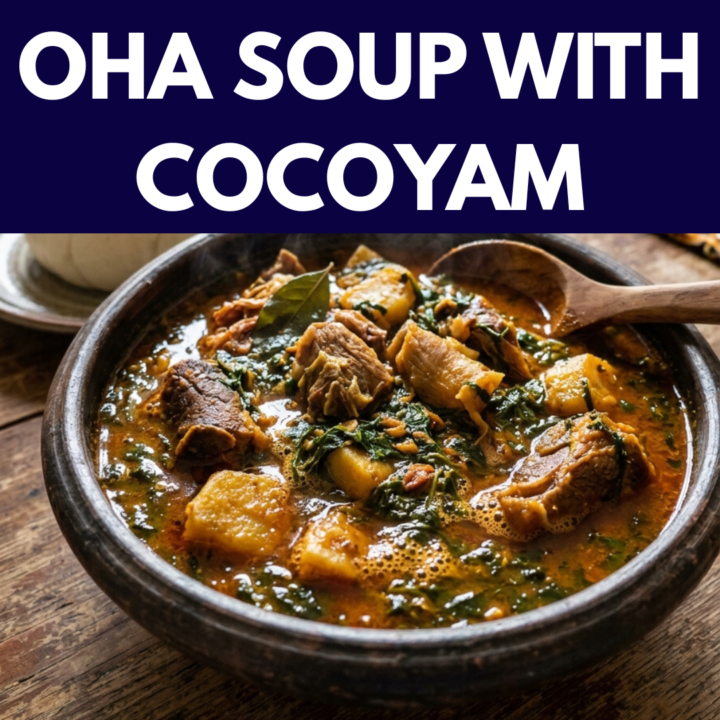
How to Cook Oha Soup with Cocoyam
If you have ever wanted to learn how to cook oha soup with cocoyam, this recipe will guide you through every step in a simple and practical way. Oha soup is one of my favorite traditional Nigerian soups because it has a rich taste, smooth texture, and that special aroma that makes every spoonful memorable.
Ingredients
- 500g assorted meat
- 300g beef
- 2 medium dried fish
- 1 cup stockfish pieces
- 2 cups cocoyam
- 4 cups fresh oha leaves
- 3 tablespoons ground crayfish
- 2 tablespoons ogiri
- 2 seasoning cubes
- 1 teaspoon salt or to taste
- 1 cup palm oil
- 2 tablespoons ground uziza seeds
- 2 cups periwinkle (optional)
- 6 cups water
Instructions
- Wash the assorted meat, beef, and stockfish thoroughly. Place them in a large pot. Add seasoning cubes, a little salt, and sliced onions if desired. Pour in enough water to cover and cook until tender.
- While the meat cooks, wash the cocoyam and boil until soft. Peel the skin while still warm, then pound or blend into a smooth paste. This cocoyam paste is what gives the soup its traditional thickness.
- Wash the dried fish and soak briefly in warm water. Add it to the pot of cooked meat and let it simmer for about 10 minutes.
- Add palm oil to the meat stock. Stir and allow it to blend into the broth for a few minutes. This creates the rich base that makes the soup colorful and tasty.
- Add the pounded cocoyam in small portions. Stir continuously so it dissolves completely into the soup. Let it cook for about 10 minutes until the soup begins to thicken.
- Add ground crayfish, uziza, and ogiri. Stir well and taste for seasoning. Adjust salt if needed.
- Add periwinkle if you are using it. Simmer for another 5 minutes so the flavors mix beautifully.
- Pick the oha leaves from the stems, wash carefully, and slice into medium pieces by hand. I avoid using a knife because hand tearing keeps the leaves softer.
- Add the oha leaves and stir immediately. Cook for only 3 to 5 minutes. Do not overcook, because fresh oha leaves lose their flavor when cooked too long.
- Turn off the heat and allow the soup to rest for a few minutes before serving. This helps all the flavors settle perfectly.
Nutrition Information:
Yield: 6 Serving Size: 1Amount Per Serving: Calories: 431Total Fat: 24gSaturated Fat: 9gUnsaturated Fat: 15gCholesterol: 183mgSodium: 1061mgCarbohydrates: 2gFiber: 0gSugar: 1gProtein: 50g